If you’re planning a corporate event in Miami – a conference, a sales kickoff, an awards night, or a company celebration – the DJ you hire will shape the energy of the entire room. This guide walks through what makes corporate DJing different from wedding or club work, the questions to ask before you book, what Miami’s venues typically require, and the warning signs that tell you to keep looking. If you already know what you need and just want a quote, you can jump straight to our Corporate Event DJ services in Miami.
What Makes Corporate Event DJing Different From Weddings and Parties
A lot of event planners assume any experienced DJ can handle a corporate booking, since the core skill – reading a room and keeping music flowing – looks similar on the surface. In practice, corporate events ask for a different set of muscles entirely.
At a wedding, the DJ controls the whole night: the timeline is flexible, the crowd is there to celebrate, and the music can build toward a peak. At a corporate event, the DJ is usually working inside someone else’s agenda. There’s a run-of-show built by an event planner or an internal communications team, keynote speakers who need precise walk-on and walk-off cues, and often an executive or brand guideline dictating what tone the event should carry. The DJ isn’t the star of the show – they’re the connective tissue that keeps transitions smooth and energy appropriate for whatever segment is happening.
That changes what “good” looks like. A corporate DJ in Miami needs to be comfortable stepping back during a keynote, building energy quickly for a networking break, and reading a room that might range from senior executives to entry-level new hires, often from different regions or even different countries if the company has an international presence. Miami’s business community in particular tends to be a mix of corporate headquarters, hospitality and tourism companies, finance and real estate firms, and international offices – which means the crowd at any given event might have very different musical expectations depending on who’s in the room. A DJ with only club or wedding experience typically hasn’t had to plan for that kind of range.
There’s also a technical layer that doesn’t exist at most social events. Corporate bookings frequently require the DJ to manage handheld and lavalier microphones for speakers, coordinate sound cues for slides or video content, and work alongside a separate AV or production team rather than running the whole show independently. None of this is difficult for someone who’s done it before, but it does mean the DJ needs experience specifically in this format, not just general entertainment experience.

How to Start the Search: What to Look For First
Before you get into questions and quotes, narrow your list using a few filters that quickly separate corporate-ready vendors from everyone else.
Look at their portfolio, not just their reviews. A DJ can have hundreds of five-star reviews from weddings and still be a poor fit for a company conference. Look specifically for footage or photos from corporate settings – conference stages, hotel ballrooms, branded backdrops, or company logos in the background. If a DJ’s entire portfolio is nightclub sets and wedding receptions, that’s a signal to keep looking, not necessarily a disqualifier, but something to ask about directly.
Check whether they can also emcee. Many corporate events don’t hire a separate host – the DJ doubles as emcee, introducing speakers, moderating transitions, and keeping the schedule on track. If your event needs this, make sure it’s explicitly part of what you’re hiring, not something you assume comes with the DJ booking.
Ask how they handle scale. Miami hosts everything from 30-person executive dinners to large-scale conferences with hundreds of attendees. The equipment, sound coverage, and even the DJ’s approach to reading the room shift significantly with size. A DJ who’s only worked intimate events may not have the production experience for a large ballroom or convention-style setup, and vice versa – someone used to massive stages might overpower a small executive gathering.
Confirm availability and communication style early. Corporate event planning tends to involve more back-and-forth than social events – coordination calls, run-of-show reviews, possibly a rehearsal or soundcheck. A vendor who’s slow to respond during the sales process is giving you a preview of what communication will look like closer to your event date.
7 Questions to Ask Before You Book
Once you’ve got a shortlist, a short call with each vendor should tell you almost everything you need to know. These questions are designed to surface real experience quickly.
- How many corporate events have you performed at in the past year, and can you name a few? Vague answers like “we do corporate events all the time” without specifics are a soft red flag. Real corporate DJs can usually name event types, industries, or venues without hesitation.
- Can you manage microphones and audio for speakers, not just music? This is a technical skill distinct from mixing music, and it’s one of the most common gaps between social DJs and corporate ones.
- Do you carry backup equipment? Ask specifically what happens if a speaker, mixer, or microphone fails mid-event. A prepared vendor has a direct answer, not a reassurance.
- What does your pre-event planning process look like? Corporate events usually need a run-of-show document, a call to align on the agenda, and a shared playlist or “do not play” list. If a DJ doesn’t ask for any of this, they may be treating your event like a standard party booking.
- Can you also serve as emcee if needed? Confirm this explicitly rather than assuming it’s included.
- How do you handle it if the agenda changes on the day of the event? Corporate schedules shift – a keynote runs long, a speaker is delayed, a segment gets cut. You want a vendor who expects this and can adapt without disrupting the flow.
- What’s included in your quote? Equipment, setup and breakdown time, travel, coordination calls, and any additional staff should all be spelled out clearly before you sign anything.
Listen less for enthusiasm and more for specificity. A DJ who’s done real corporate work will answer these naturally, often before you finish asking. Hesitation, vague reassurances, or answers that only make sense for weddings are worth noting.
What Miami Corporate Events Require Logistically
Corporate events across Miami tend to fall into a few common venue types, and each comes with its own set of practical considerations worth discussing with a prospective DJ.
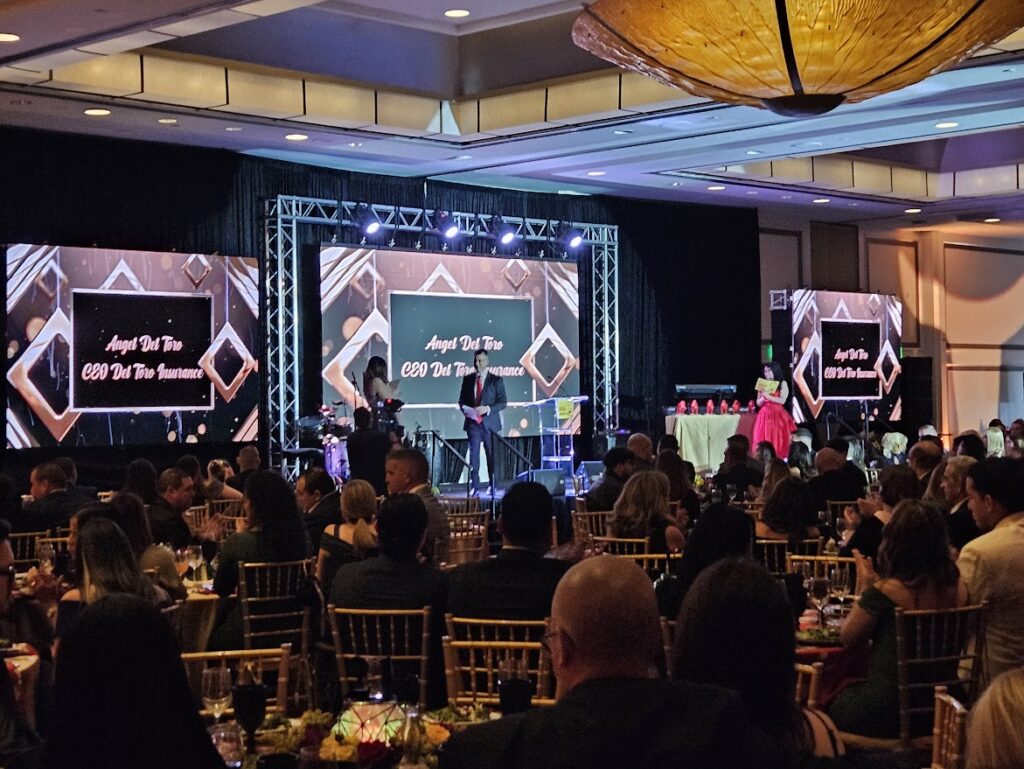
Convention centers and large conference venues typically involve working alongside an in-house or contracted AV team, coordinating sound levels across a large room, and syncing music cues with stage presentations. A DJ used to independently running a full show may need to adjust to sharing technical responsibility with a separate production crew.
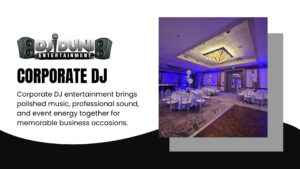
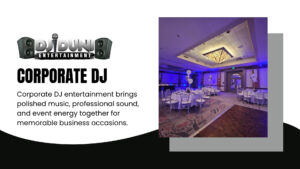
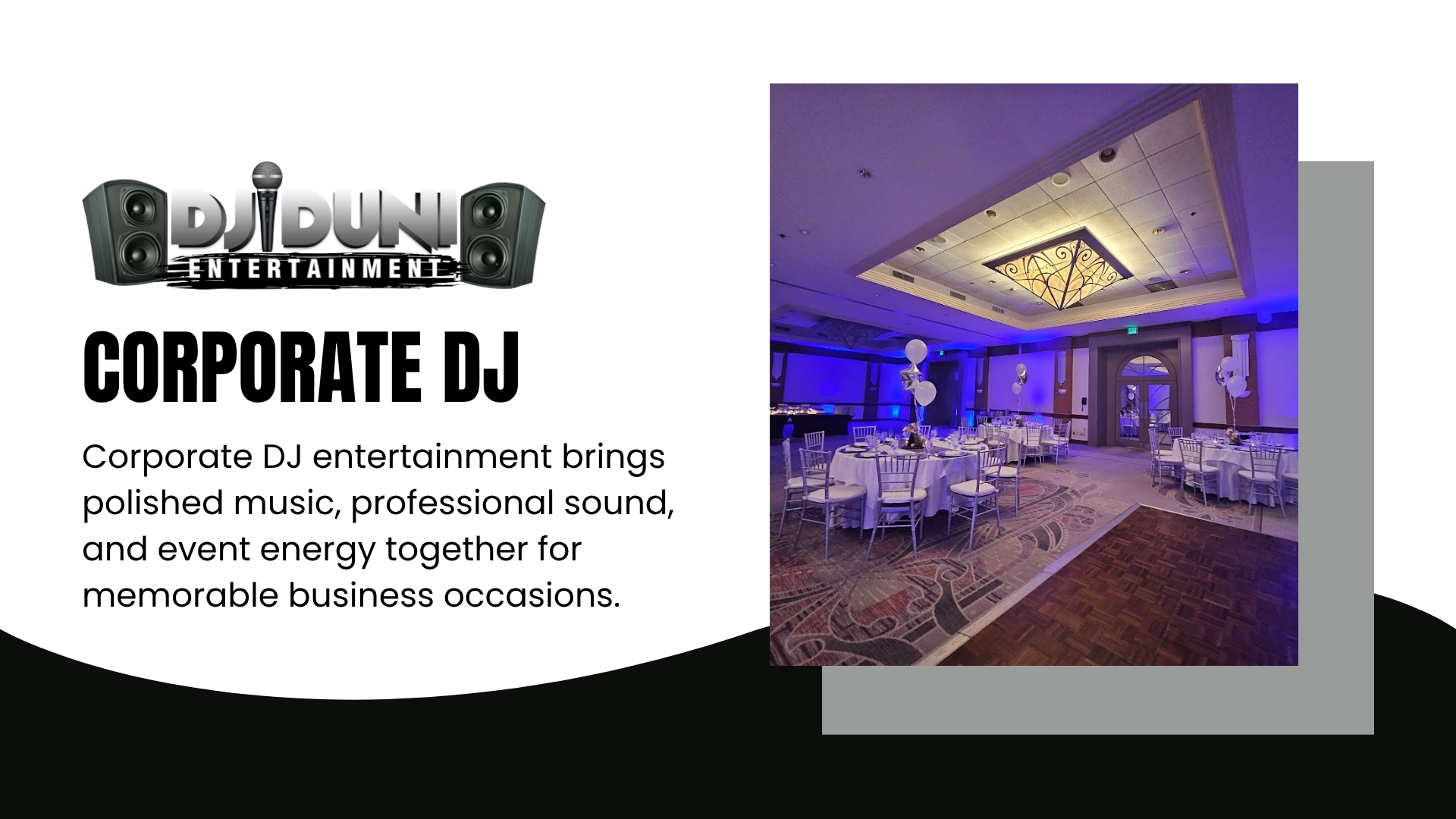
Hotel ballrooms, common for galas, award nights, and multi-day conference wrap events, often have house sound systems the DJ needs to integrate with, along with strict load-in and load-out windows set by the venue. Timing and logistics matter as much as the music selection here.
Outdoor and rooftop venues, which Miami has no shortage of, introduce weather and acoustic variables that don’t come up indoors – wind interference, humidity affecting equipment, and sound dissipating differently in open air. A DJ experienced with Miami’s outdoor event scene will typically have a plan for backup power, weatherproofing equipment, and adjusting speaker placement for open spaces.
Smaller executive venues and private event spaces usually mean less production complexity but a higher expectation of polish – these are often intimate gatherings where the DJ’s music choices and interpersonal presence carry more weight than production scale.
Across all of these, South Florida’s climate is worth a direct conversation regardless of venue type. Heat and humidity affect both equipment and outdoor event timing, and a DJ who’s worked in Miami consistently will already have contingency habits built in rather than needing to figure it out on the day of your event.
Red Flags That Signal an Inexperienced Corporate DJ
A few patterns tend to show up when a DJ isn’t actually equipped for corporate work, even if they present well initially.
No written contract. A verbal agreement or a casual email confirmation isn’t a substitute for a real contract. A professional corporate vendor will provide one that covers the event date, scope of service, equipment, payment terms, and cancellation policy without you having to ask twice.
Pushback during the sales process. If a DJ resists direction or seems annoyed by detailed questions before you’ve even booked them, that posture typically doesn’t improve once you’re under contract.
Vague answers about insurance or backup plans. Many corporate venues require proof of liability insurance, and a DJ unfamiliar with this requirement may not be used to working corporate venues regularly.
A portfolio that’s entirely social events. This isn’t automatically disqualifying, but it should prompt more specific questions about how they’d adapt their approach to a professional setting.
Reluctance to do a planning call. Corporate events benefit from at least one coordination conversation before the event date. A vendor who wants to show up and “figure it out” on-site is taking on risk that should really sit with you deciding whether to book them.
DJ vs DJ-Emcee Combo – Which Does Your Event Need?
This is one of the most overlooked decisions in the planning process, and it’s worth settling early because it affects who you’re even evaluating.
If your event has a structured agenda – keynote speakers, award presentations, scheduled segments, a program that needs to move on time – you likely need someone who can serve as both DJ and emcee. This person introduces speakers, manages transitions, keeps the room on schedule, and provides music, essentially acting as the connective narrator for the whole event.
If your event is more free-flowing – a holiday party, a team celebration, an open networking reception without a formal program – a DJ alone may be all you need, since there’s no agenda requiring active hosting.
Some companies split the roles, hiring a separate host or executive from within the company to handle formal remarks while the DJ focuses purely on music and transitions. Either approach works, but deciding this ahead of time changes what questions you should be asking vendors and what their quote should include.

Timeline: When to Book and What Happens Before Event Day
For a Miami corporate event, it’s worth starting the search well before your date, particularly if your event falls between October and December, which tends to be the busiest stretch for corporate entertainment across the city due to year-end conferences, holiday parties, and Q4 sales events. Popular vendors book up fastest during this window.
Once you’ve selected a DJ, a typical lead-up includes a planning call to align on the agenda and run-of-show, a shared document covering music preferences and any songs or genres to avoid, confirmation of AV and technical requirements with the venue, and a final check-in close to the event date. If the DJ is also serving as emcee, this planning phase usually goes deeper, covering speaker names, session order, and any specific language or branding the company wants reflected in how things are introduced.
The Takeaway
Hiring a corporate event DJ in Miami comes down to matching experience to your event’s actual structure – not just booking whoever has the most reviews. Look for real corporate portfolio evidence, ask direct questions about technical experience and contingency planning, and decide early whether you need a DJ alone or a DJ-emcee combo. If you’d like to talk through what your specific event needs, our Corporate Event DJ services in Miami page has more on how we approach exactly this.
Frequently Asked Questions
Do corporate DJs in Miami also work as emcees?
Many do, but it’s not automatic – confirm this specifically with any vendor you’re considering, since some corporate DJs offer emcee services as an add-on rather than a default inclusion.
How far in advance should I book a corporate DJ in Miami?
Earlier is generally better, especially for events in the busier October–December stretch, since experienced corporate vendors tend to book up well ahead of peak season.
What’s the difference between a corporate DJ and a wedding DJ?
The core difference is structure. Corporate events run on a fixed agenda with speakers, sessions, and brand considerations, while wedding DJs typically control the full timeline independently. The skill sets overlap but aren’t interchangeable.
Can one DJ handle a large conference and an intimate executive dinner equally well?
Not always. Scale changes what’s required – large events need production and AV coordination experience, while small gatherings put more weight on tone, music selection, and personal presence. It’s worth asking a prospective DJ directly about their experience at events similar in size to yours.