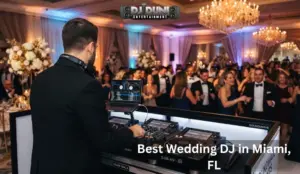

Every wedding you have ever been to that felt magical had a moment you probably did not notice: the transition from the ceremony to the cocktail hour, the pause between the toasts and dinner, the exact second the lights shifted and the first dance began. You did not notice, because someone was running those moments in the background so smoothly that they felt like the natural order of the evening. That someone was almost always the wedding DJ, and getting that hire right is one of the most consequential decisions in the entire planning process.
Couples often underestimate how much of a wedding actually rests on the DJ. The ceremony processional, the cocktail hour ambiance, the reception introductions, the toasts, the first dance, the parent dances, the dinner music, and the dance-floor arc from the sentimental opener to the last song of the night, every one of those moments passes through the DJ’s console and their microphone. This guide walks through exactly how to pick the right one: what a modern wedding DJ actually does, how the role differs across the ceremony, cocktail hour, and reception, what to look for in a portfolio, the questions that surface a real professional, and the details that protect the day.
What a Wedding DJ Actually Does
The label sells the role short. A modern wedding DJ is really three professionals in one: a music curator, a live emcee, and a timeline coordinator. The music matters, but it is usually the least stressful of the three.
Music curation runs the emotional arc of the entire day, matching mood to moment: reflective and elegant during the processional, bright and social through cocktail hour, warm and unobtrusive at dinner, and building toward a dance floor that keeps guests present for the last song. The best professional wedding DJs think in arcs rather than playlists, planning how a room’s energy will rise and settle across seven or eight hours.
Emcee work is the more visible half of the job on the day. Introducing the wedding party, cueing the toasts, calling the couple onto the dance floor, announcing the cake cut, thanking the parents, and holding space for a father-daughter dance that turns into a tearful hug, the microphone is where a wedding DJ either elevates the moment or accidentally deflates it. Voice, timing, and warmth are what separate a wedding DJ from someone who just plays music.
Timeline coordination is the invisible spine of the whole night. A professional wedding DJ works with the planner, the photographer, the caterer, and the venue coordinator to hit every cue at the right time, adjusting when the ceremony runs long, when dinner is delayed, or when the maid of honor’s speech goes past its allotted window. On a smooth wedding day, the DJ and the planner run the room together.

The Three Phases of a Wedding, and How the DJ’s Role Changes
One of the most useful things a couple can understand before hiring is how a wedding DJ’s job shifts across the day. Different phases call for different skills, and asking the right questions about each one filters real professionals from generalists.
The Wedding Ceremony DJ
A wedding ceremony DJ is responsible for the audio spine of the ceremony itself. That includes reliable amplification for the officiant and any readers (lavaliers or a hidden podium mic, plus a wireless handheld for readings), a small speaker system positioned for the ceremony space rather than the reception, and precisely timed processional and recessional music. This is genuinely harder than it sounds. Ceremony audio has almost no room for error, no one wants a feedback squeal during a vow exchange, and the cue timing has to match the pace of the wedding party walking in.
Not every wedding DJ handles the ceremony directly. Some couples pair the DJ with live musicians, a string quartet or a violinist, for the ceremony and hand off to the DJ for cocktails and onward. That is a completely legitimate approach and one of the most memorable ways to elevate a ceremony. If your DJ operation offers live musicians like quartets or violinists, booking both through the same provider keeps the audio setup unified and eliminates coordination between two vendors on the day.
The Cocktail Hour
Cocktail hour is the wedding’s social pivot. Guests have just moved from a seated ceremony to a mingling reception space, family is meeting for the first time in years, and the room needs music that lifts the mood without dominating conversation. A professional wedding DJ programs this hour carefully: broad, elegant, familiar without being expected, and mixed at a volume that lets people talk without shouting. The subtle skill here is knowing when to shift energy as the room fills and when to hold steady.
The Wedding Reception DJ
The reception is where the wedding DJ earns most of the fee. The arc runs from a hushed room during grand entrances and toasts, through a mid-tempo dinner service, into the choreographed emotional peaks of the first dance and parent dances, and out onto a dance floor that has to stay full for the next three or four hours across a genuinely mixed crowd. A wedding reception DJ who cannot hold that arc is not a professional; they are a hobbyist with an expensive playlist.
The reception also concentrates the emcee’s work. Wedding party introductions, blessings, toasts, cake cutting, garter or bouquet moments if the couple wants them, anniversary or shoe game moments if the family has traditions, and the transition into open dancing all pass through the DJ’s microphone in a compressed window. Confidence and warmth on the mic are non-negotiable here.
The Wedding DJ & MC Combo: When One Person Runs the Room
Traditionally in some markets, the DJ and the master of ceremonies were separate roles. In modern weddings, especially in the U.S., they have merged. The wedding DJ & MC package means one professional runs both the music and the microphone throughout the evening, which most couples now prefer for two reasons.
The first is coherence. When the same person is programming the music, calling the moment, and adjusting the mood, transitions flow more naturally. There is no awkward handoff between an announcer stepping aside and the music starting. The second is cost and coordination: one vendor is simpler to book, brief, and pay than two.
The trade-off is that the DJ has to actually be good at both jobs. Some music-first DJs treat the microphone as a nuisance and rush through announcements; some emcee-first hosts under-serve the musical arc. Before booking a wedding DJ & MC, ask for live audio of them hosting a real wedding, not just a mix or a promo reel. The mic voice is what you cannot recover if you get it wrong.
What to Look For in a Wedding DJ Portfolio
A portfolio should show, not just tell.
- Real weddings in the couple’s target style. Formal ballroom, coastal, backyard, destination-style. Whatever your wedding will look like, the portfolio should include events that resemble it.
- Live footage with sound. The single most useful artifact in any wedding DJ’s portfolio. Silent photos hide the two things you most need to hear: how they mix and how they sound on the mic.
- A full dance floor with a mixed-age crowd. If every dance-floor photo is packed with people in their twenties, that is a DJ built for one demographic, and most weddings need more range than that.
- Setup photos that look elegant, not clubby. A wedding booth should blend into the room’s aesthetic, not compete with it. Neon, nightclub-style booths tend to photograph badly against wedding decor.
- Reviews from wedding planners. Planners see many DJs and only recommend the ones who make their job easier. A planner review is worth ten couple reviews.
Questions to Ask Before You Book
A short call surfaces most of what a portfolio cannot show. Ask these, and pay attention to the specificity of the answers.
- Which DJ from your team will actually perform at our wedding? Can you name them in the contract?
- How many weddings have you personally done in the last twelve months?
- Do you handle the ceremony as well as the reception? What does your setup look like for each?
- Are you comfortable acting as our MC, or would you recommend a separate MC?
- How do you handle a mixed-age dance floor? Walk us through how you would program from dinner into open dancing.
- What is your policy on requests, and how do you handle a do-not-play list?
- Do you carry liability insurance? Can you name our venue as an additional insured on the certificate if required?
- What is your backup plan if you are sick or a piece of gear fails on the day?
- What does your contract include, exclude, and require as a deposit and balance schedule?
- What is your overtime rate if the reception runs long?
A confident, specific answer signals a professional. Vague or defensive answers usually signal exactly what they seem to.

Red Flags Worth Walking Away From
Certain patterns reliably predict a difficult wedding day.
- No wedding-specific portfolio, only corporate, private parties, or nightclub work.
- No live audio anywhere on the site or social media.
- A different DJ than the one who pitched you, without disclosure. Get the actual performer named in the contract.
- No liability insurance, or vague answers about coverage.
- A quote well below the local market for professional wedding DJs. In this category, low prices almost always mean missing insurance, older gear, a less experienced performer, or a subcontracted DJ you have not met.
- Reluctance to sign a detailed contract or discuss overtime and cancellation terms.
- Poor communication before booking. The tempo of their responses now is exactly what you will experience in the crunch weeks before the wedding.
Gear and Setup Every Couple Should Understand
You do not need to become an audio engineer, but a working knowledge of the setup prevents surprises.
For a mid-sized wedding, a professional wedding DJ typically brings a modern digital DJ controller or CDJ system, powered speakers appropriately sized for both the ceremony and reception spaces, a subwoofer for the dance floor, at least two wireless microphones (a handheld for toasts and a lavalier for the officiant if they need it), and, most importantly, a spare of everything critical. Backup laptop, spare microphones, redundant cables, and a plan for power failure. Redundancy is the single clearest marker of a professional rig, because at weddings, more than any other event, there is no second take.
Lighting is where wedding presentation is most transformed. Uplighting in the couple’s wedding colors reshapes a plain reception hall into a branded, cinematic space that photographs beautifully. Dance-floor lighting adds energy without turning the room into a nightclub. For signature moments, cold sparklers during the grand entrance or the first dance produce the phone-video clips guests share on social media the next morning. A photo booth gives guests an interactive activity between courses and generates a keepsake the couple treasures for years. And for high-energy reveal moments, features like LED robots or dancers create a wedding moment guests genuinely never forget.
Because most DJ operations offer these under one broader menu, booking through your DJ rather than juggling multiple vendors dramatically simplifies coordination on the day.
The Wedding Timeline: How the DJ Fits In
The wedding timeline is a shared document among the couple, the planner, the photographer, and the DJ, and how the DJ works with that timeline reveals a lot about their professionalism. A good wedding DJ requests the working timeline weeks in advance, reviews it against the pace they know works, and flags potential problems early. The first dance three minutes after the couple enters, before guests have found their seats? Probably too tight. The toasts spread across all of dinner? Fine, but the DJ needs to know so they can pace the dinner music around them.
On the day, the DJ coordinates minute by minute with the photographer, who cannot capture the first kiss if they are not warned it is coming, and with the venue’s catering captain, who cannot pace courses without knowing when the toasts will end. A professional wedding DJ operates as a quiet hub of that communication rather than waiting to be told.
Why Local Knowledge Pays Off on a Wedding Day
Familiarity with your specific venue changes how smoothly a wedding day runs, which is one of the underrated reasons couples search for a wedding DJ near them rather than casting nationally. A local pro already knows the venue’s load-in, the ceremony space’s acoustics with a full guest count, the reception hall’s power quirks, how the venue’s coordinators like to run cues, and the traffic reality of arrival time on a Saturday afternoon. Miami is a good example.
Between the coastal humidity that punishes gear, the variety of venue types from Coral Gables banquet halls to Wynwood lofts to waterfront estates, and the load-in logistics at boutique properties with valet-only access, a lot of quiet judgment goes into a smooth wedding day. That judgment is worth more than a slightly cheaper quote from an unfamiliar vendor.
Ready to Book Your Wedding DJ
If you are planning a Miami-area wedding and you want a DJ who handles the ceremony, cocktail hour, reception, and MC duties with the calm of someone who has done it a hundred times, DJ Duni Entertainment is a Miami-based sound and lighting collective serving weddings, private celebrations, and corporate events across Miami-Dade County. See the full scope of the wedding DJ service in Miami on the page, or call (305) 300-3785 to check availability for your date. Book early, sign a clear contract, and let a professional run the room while you enjoy every moment of the day you have been planning.
Frequently Asked Questions
What does a wedding DJ actually do?
A modern wedding DJ handles three roles: music curation across the ceremony, cocktail hour, and reception; MC duties for introductions, toasts, and program moments; and timeline coordination with the planner, photographer, and venue. The role is closer to running the room than “playing music.”
Do I need a separate ceremony DJ and reception DJ?
Usually not. Most professional wedding DJs cover both, using different speaker setups for each space. Some couples pair a DJ with live musicians like a quartet or violinist for the ceremony, then hand off to the DJ for the cocktail hour and reception, which can be booked from a single provider.
What is the difference between a wedding DJ and a wedding DJ & MC?
A wedding DJ & MC combines the music role with master-of-ceremonies duties in one person, which is now the standard in most U.S. weddings. Ensure the DJ is genuinely comfortable on the microphone before booking, since not every music-first DJ is a strong emcee.
How far in advance should I book a wedding DJ?
Six to twelve months out is typical for popular dates, and peak-season Saturdays fill even earlier. If your wedding is in a peak spring or fall month, three to six months out is often the minimum for a top professional wedding DJ.
How much does a wedding DJ cost?
Cost depends on hours, venue, gear, and add-ons like uplighting, photobooths, or ceremony musicians. Quotes far below the local market for professional wedding DJs almost always indicate missing insurance, older gear, subcontracted performers, or less experience, which is not where to save on a wedding.
How do I find a good wedding DJ near me?
Look for real wedding footage with live audio, testimonials from planners and couples, insurance, transparent contracts, and local knowledge of your venue. Search local wedding vendor directories, ask your planner or photographer for referrals, and prioritize DJs who specialize in weddings rather than generalists.
What should a wedding DJ contract include?
The named performer, arrival and start times, contracted hours, overtime rate, gear provided, ceremony VS reception setup, breakdown time, deposit and balance schedule, cancellation terms, insurance details, and a backup plan if the DJ becomes unavailable. Vague contracts are red flags.
Can our wedding DJ also handle uplighting, a photobooth, or ceremony music?
Yes, most professional wedding DJ operations offer uplighting, dance floor lighting, photo booths, cold sparklers, and live ceremony musicians as add-ons. Booking through your DJ keeps coordination on the wedding day simple and typically saves money versus separate vendors.